
Writing ·
Meaning Beyond Words: The Complexity Of Narrative And Human Understanding
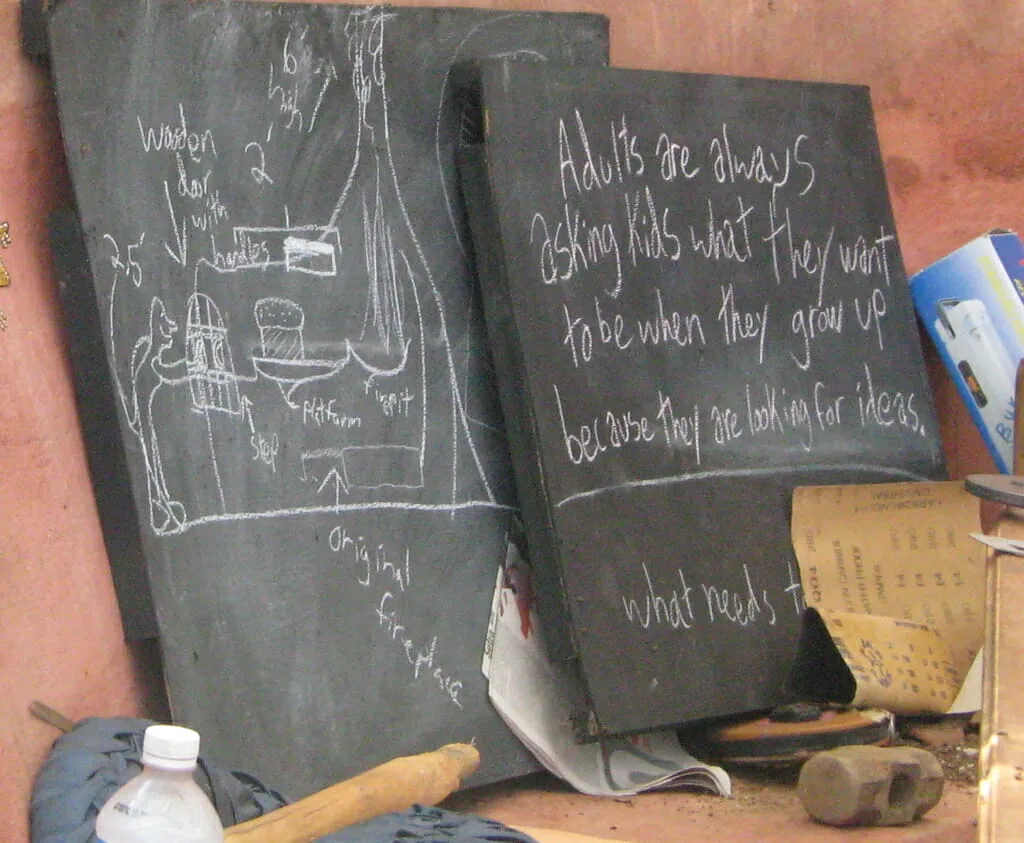
Meaning looks simple until I sit with it. Words, stories, language itself all seem to hand over meaning without fuss, yet that meaning is not fixed. Nor is it always sitting inside the words themselves. What I mean by meaning is something the author and the reader build between them, a live exchange shaped by context, by intention, by what each of us perceives and how we interpret it. I want to consider that doubled nature of meaning here, and the limits of language along with it, and ask whether every meaning can really be carried by a narrative at all.
The Mundane and the Breakdown of Meaning
At the plainest level, words seem to mean something. When I write these words I am using whatever faculties I have to arrange them so that they carry a narrative to you, the reader. When you interpret that narrative, meaning arrives, and it arrives a little differently for each reader, because each of you brings a different vantage, a different context, a different room to read in. A lecture given to a hall is heard differently by every person in it, depending on where they sit, what they attend to, how they take it. A written text is the same, only more so. It is subject to the setting it is read in: the physical place, the mood of the reader, what the reader already knows.
Even so, most of us carry a belief that there is a “base” meaning in a narrative, a meaning tied to what the author intended and presumed to be what the reader will receive. This idea of base meaning rests on the assumption that the narrative points at something in the world the author and reader both share. We tend to treat that shared meaning as an objective truth, and to assume the words chosen are enough to say that truth accurately. On reflection, it is more complicated than that.
A narrative can be right or wrong about conditions out in the world, but being right is not the only measure of its meaning. Communication is very often about more than stating facts. It may be meant to get someone to act, to carry a feeling, to change a mind or a habit. The narrative might be an invitation, a declaration of love, a cry for help. Words are not only vessels for fact. They are tools of connection, of persuasion, of feeling, and those tools carry meaning that cannot always be neatly stated.
The Dynamics of Author and Audience
So meaning is not just a matter of matching the world. It is also a matter of whether the words work, whether they bring about what they were sent to do. An author may write to persuade, to inspire, to provoke. The meaning of that narrative can be called “effective” if it produces the action or the feeling the author was after, even when the narrative itself is factually wrong. That is the tension I keep returning to: the author’s wish to influence, set against the accuracy of what is said.
Think of the different jobs we ask communication to do: debate, teaching, advertising, telling a story. In each of these, the truth of the words may matter less than their effect. And meaning is also made on the inside. A person’s inner dialogue can throw up narratives that are entirely personal, shaped by inner experience and emotion that may have little to do with anything outside.
Writing, in this sense, is talking to yourself. The audience is not in the room, and the written word has to cross that distance, holding the author’s thought and laying it out in a way that guesses at how the reader will take it. The meaning of the words, then, is as much what they do in the reader as whether they are correct. Words are not simply containers for meaning. They are tools, and they can be used to shape perception, in oneself and in others.
Meaning as a Relational Construct
Words do not hold meaning the way a cup holds water. They point at it. They are markers that depend on the context the author and reader share. What a narrative means depends not only on what the author knows about the world but on what the author hopes to draw out of the audience. A narrative may be built to inform, but it may just as well be built to manipulate, to comfort, or to move someone to act.
The reader, for their part, does not soak up meaning passively from the page. Each reader comes with their own perspective, their own experience and bias, and interprets the words in a way that is deeply their own. The author may have chosen certain words with certain meanings in mind, but the containers of meaning, in the end, are formed inside the reader’s context. The author, the reader, and the social, political, or cultural setting in which the reading happens all work on each other, and the final interpretation of the narrative comes out of that.
This is why words can never fully catch every aspect of reality. The meaning is not static and it is not universal. It moves, reshapes itself, adapts as it passes between minds, contexts, and interpretations. It is a living process, not a finished product.
The Limits of Language
For all the richness of language, I have reason to believe that some of the most fundamental human experiences lie beyond words. Meaning is implied, felt, and understood in ways that do not always go into narrative form. The assumption that everything meaningful can be put into words is itself a limit. Language works inside a closed field of intellectual thought, a system we mostly take for granted as adequate to every facet of reality.
Yet language falls short of the inexpressible, the core of being human that goes past intellectual articulation. Moments of overwhelming beauty, deep grief, a love that has no name for it: these resist the constraints of language. No narrative, however carefully built, holds the whole depth of such experiences. They are felt and known inside, past the reach of words.
Even the most carefully made narrative is understood differently by every reader, each meeting the text inside their own context. That multiplicity of readings is not a flaw in language. It is a sign of how alive language is. Words are tools that point toward shared experience, but they do not and cannot hold the whole of that experience.
Meaning Beyond Narrative
If I accept that not every meaning can be caught in language, then I have to accept that the ground of our understanding is more than words. There is a region of meaning past the narrative, rooted in direct experience and subjective awareness. These meanings are the foundation of our sense of self, of our emotional lives, of how we understand the world. They cannot be fully communicated, but they are fundamental to who we are.
The real work is to recognize the limits of language and keep using it anyway, to connect, to share, to explore. Words can bridge the gap between people, pointing at shared experience, but they cannot erase the uniqueness of each person’s point of view. In admitting that, we can better value silence, presence, and direct experience as parts of meaning that go beyond anything spoken or written.
Summary: The Complexity of Meaning
Meaning is a complex thing that words cannot fully contain. It is not made of words. It is rather what our life evokes from words in this moment. It is built in the exchange between author and reader, shaped by intention, perception, and context. Narratives can be right or wrong, effective or not, but they are always bounded by language. The deeper aspects of human experience, the very essence of being, often slip past articulation, a reminder that the richness of life is not fully held by what can be said.
By understanding the limits of language, we open ourselves to other ways of knowing and being. Meaning is not only about words. It is about connection, experience, and the shared reality that lies past the narrative. It is in the unspoken, the ineffable, and the lived experience that we find the deepest meanings of all.
Addendum: Mathematical Relationships and the Trans-Quantum Nature of Meaning
When I consider meaning beyond narrative, I also have to recognize the mathematical relationships that hold between words and the unknowable events that first evoked the subjective act of writing. The corporeal trace left by the writing agent is an expression of subjective meaning, made manifest in the physical world. The exact event that prompted the writing may stay unknowable, but it is still possible to deconstruct the trace by looking at the steps that must have been taken to produce it.
The subjective moment of meaning sits inside a “bubble of emptiness” that expands to take in a little of the past (retention, memory, and models built from experience) and a little of the future (protention, expectations, hopes, fears, and models of the field of agency). The present, the state of “now,” is a net timeless, net spaceless region, a wave of some volume and duration, which persists for some time and lets the being remember an idea of what has happened. This experience is akin to the collapse of a wave function, but it is felt as a continuity of successive moments, each culminating in a similar intention and recollection.
The inner state of subjective being is, in a sense, “trans-quantum.” The in-between times, those moments that cannot be isolated to a single, absolute place, are beyond quantum description. It is only after the resolution of the “quanta of now” that an agent may learn a lesson, identify a new entity, or note a change in the field of agency. The Perception-Integration-Action (PIA) cycle represents the derivative of these changes, occurring at the same time at different degrees and in different ways across the complex substrates that make up the bubble of the moment. Beyond the horizon of this bubble, quantum statistics give a limited view of the outcomes of the moment as a whole.
To put meaning into language is, at best, an approximation. Catching meaning in words is something like describing the first derivative of an experience; repeating it in an objective serial narrative is something like expressing its second derivative. So for a sentence to have meaning, it must be recontextualized in the space and time of the reader. The basis for meaning is always changing, shaped by the reader’s personal history, context, and relationship to the text.
An author’s intended audience may have an expected basis for understanding, built up through shared discourse over time. But once an objective serial narrative is out in the world, it can be understood, and translated further into unknown forms, by any number of other readers. Whatever those transformations, the fundamental process is the same: the narrative has to be reestablished within the context of each individual reader before it carries meaning.
First published on temnoon.com. Re-voiced from that original, in the Tem Noon Voice persona (9497f2d0) on 2026-10-11; the original is kept in the archive.